
BOST Loksewa Guide: All 10 Basic Office Skills Test Question Types
What BOST is in the Kharidar first paper, the ten question types with worked examples and methods, a four-week practice plan, time management, common mistakes and extra solved questions.
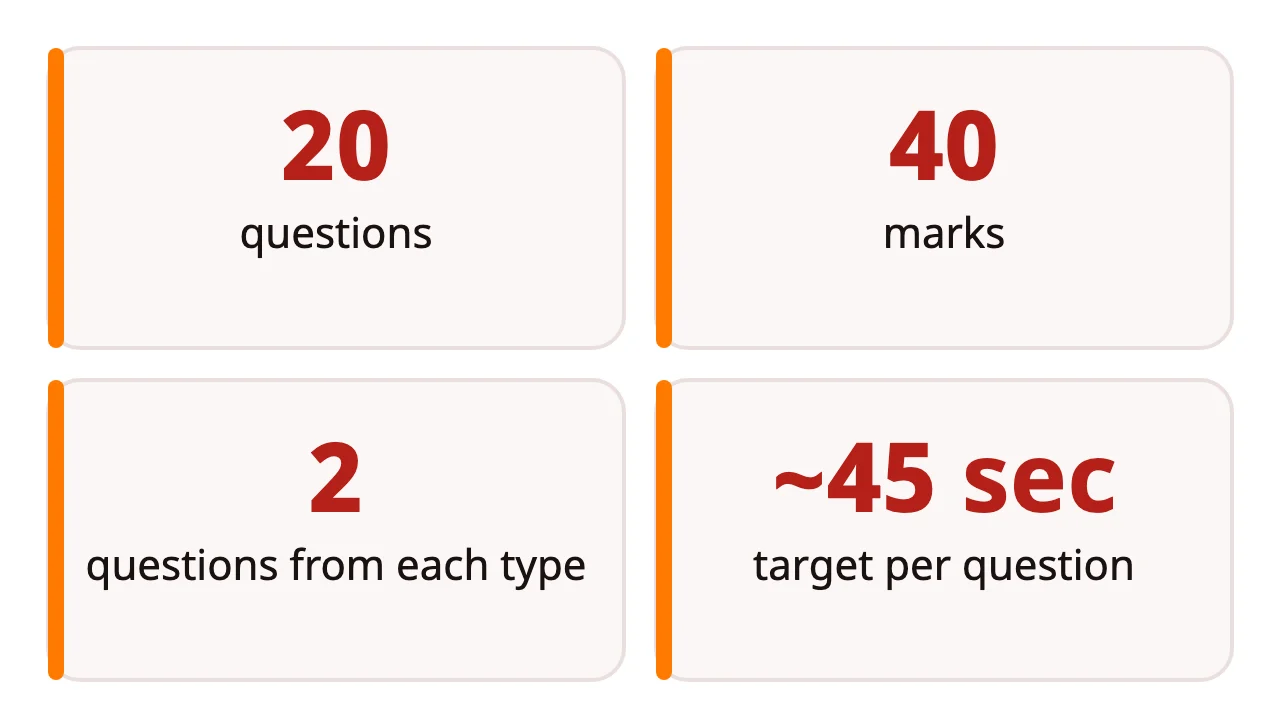
Of the 50 questions in the Kharidar (खरिदार) first paper, 20 come from the Basic Office Skills Test (BOST). This section carries 40 marks, more than any single general knowledge unit. The good news about BOST loksewa preparation is that it is learned by practice, not memory: learn the right method and your marks rise in a short time. This guide gives an example of each of the ten question types, how to solve it, and a practice plan.
Why is there a BOST?
According to the Public Service Commission's syllabus, BOST checks whether a candidate can do office work quickly and correctly: read fast, check numbers and letters for accuracy, compare information, follow written instructions and make simple decisions. It is set at a level a class 10 graduate can answer and puts weight on analysis rather than memory.
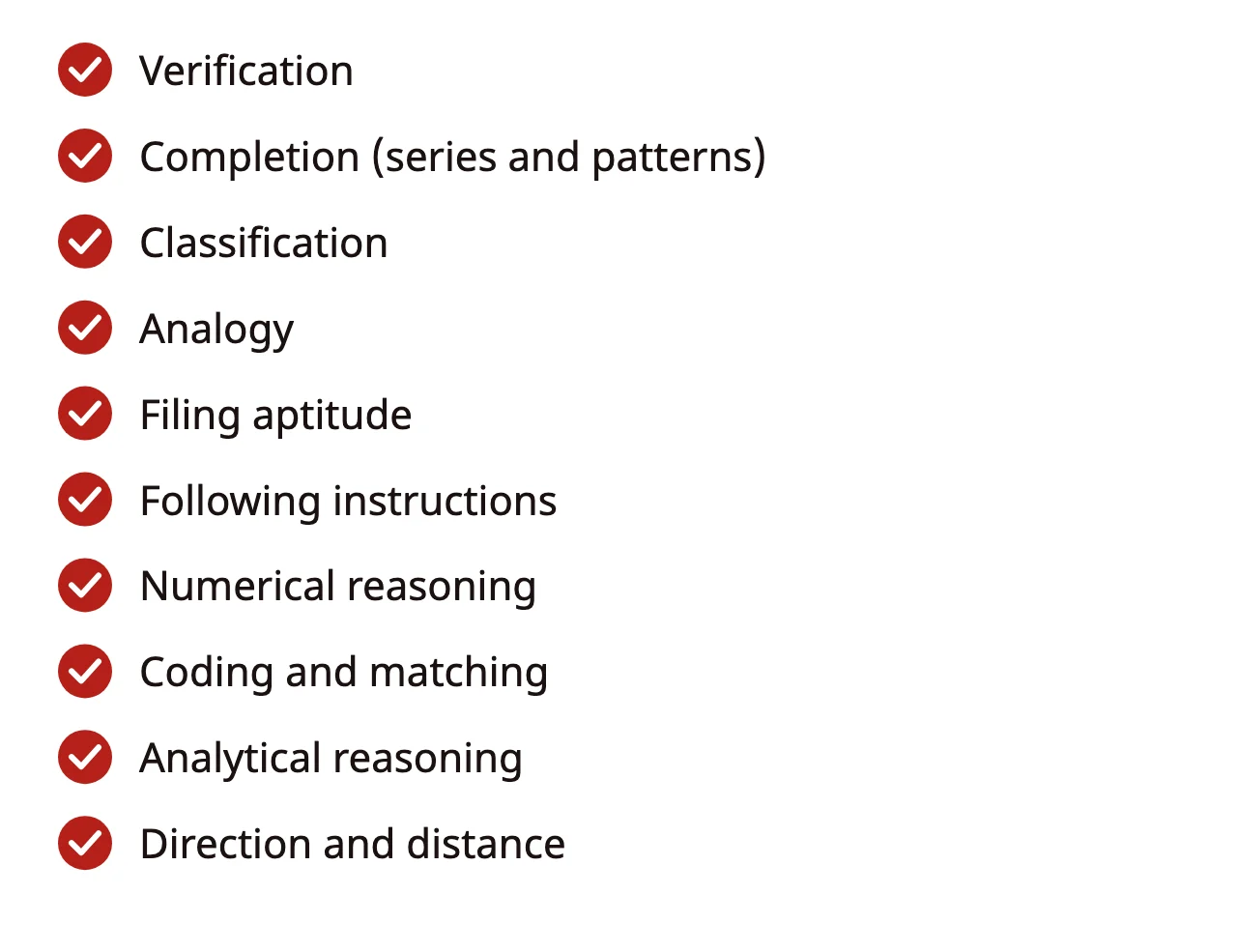
BOST loksewa: the ten question types
1. Verification
Check whether the numbers, letters or names in two lists or pairs are exactly the same.
Example: which pair is identical? (a) 4521-7832 / 4521-7823 (b) KTM-09-B / KTM-09-B (c) Ramkumar / Ramkmar (d) 98015 / 98051. Answer: (b).
Method: split long numbers into chunks of three or four digits and compare them; reading backwards from the last digit shows mistakes faster.
2. Completion
Find the rule of a number, letter or picture series and fill in the next term.
Example: 5, 10, 20, 40, ? Answer: 80, because each term doubles.
Method: look at the differences first (adding or subtracting); if that fails, the ratio (multiplying or dividing); then squares and cubes or alternating series.
3. Classification
Pick the one that does not belong in the group.
Example: pick the odd one out: potato, carrot, radish, tomato. Answer: tomato, because the others grow underground.
Method: look for the obvious property first (type, use, place); with numbers, check odd and even, squares and primes.
4. Analogy
Apply the relationship of the first pair to the second.
Example: book : library :: medicine : ? Answer: pharmacy (the place where it is kept).
Method: say the relationship as one sentence, "a book is kept in a library", and test that sentence on each option.
5. Filing aptitude
Put names, numbers or dates in alphabetical, numerical or date order. This is linked to records management in an office.
Example: put these dates from oldest to newest; which comes in the middle? 2083/07/25, 2083/05/31, 2083/06/28. Answer: 2083/06/28.
Method: compare the year, then the month, then the day; with names, if the first letter is the same, look at the second.
6. Following instructions
Answer by following a written instruction exactly.
Example: "If 7 multiplied by 3 is greater than 20, write 'yes'; otherwise write 'no'." Answer: yes (21).
Method: read the instruction twice and tick off each condition as you go; hurrying causes the most mistakes here.
7. Numerical reasoning
Simple arithmetic: percentages, ratios, averages, profit and loss, time and work.
Example: what is 12 percent of Rs 500? Answer: Rs 60.
Method: get used to working out 10%, 5% and 1% in your head; 12% = 10% + 2%.
8. Coding and matching
Turn letters or numbers into a code by a rule, or match them.
Example: if BOOK is written as CPPL, how is PEN written? Answer: QFO (each letter moves one place forward).
Method: find the rule from the first two letters and check it on the rest; knowing the positions A = 1 to Z = 26 by heart makes it faster.
9. Analytical reasoning
Draw a conclusion from the information given, such as seating or order.
Example: A, B and C stand in a line. A is at the far right and B is not in the middle. Who is in the middle? Answer: C.
Method: turn the information into a small drawing or table; place the certain facts first.
10. Direction and distance
Work out the final position, direction or distance from a description of a walk.
Example: someone walks 4 km west, turns right and walks 3 km. How far are they from the start? Answer: 5 km (north-west), because 3, 4 and 5 are the sides of a right-angled triangle.
Method: draw a small N-E-S-W sign beside each question; left and right turns depend on the direction you are walking.
A BOST practice plan
- Week 1: two types a day, 15 questions of each, without timing. Goal: understand the methods.
- Week 2: three types a day, 20 questions of each, within one minute per question.
- Week 3: 20 mixed questions in 15 minutes every day. That is exam speed.
- Week 4: full 50-question mock tests, giving the 20 BOST questions about 15 to 18 minutes.
Start with the BOST sample questions (in Nepali). The Kharidar BOST course in the Dipa App has many practice questions, and its AI picks more questions from the types you are weak in; see AI Lok Sewa preparation.
Managing time in the exam
Verification, classification and filing questions are usually quick; aim to finish them in 30 to 40 seconds. Numerical, analytical and direction questions take longer. If you are stuck on a question for more than a minute and a half, mark it and move on. A wrong answer loses 20 percent of the marks, so before you guess, read our negative marking loksewa guide.
Common BOST mistakes
- Not reading the whole question: choosing the "matching" one when the question asks for the "odd" one, or reading "left" as "right", is very common. Stress the key word of the question in your head.
- Getting stuck on one question: giving three minutes to one of 20 questions costs you three easy ones.
- Not checking the coding rule fully: a rule that works for the first two letters may fail on the third; check every letter before you answer.
- Reversing turns in direction questions: left and right depend on the direction of walking, not on the left and right of the paper.
- Rushing mental maths: writing one line of working on paper in numerical questions cuts mistakes.
More practice with solutions
Question 1 (series): 2, 3, 5, 8, 12, ? Answer: 17. The differences grow 1, 2, 3, 4, so the next difference is 5.
Question 2 (classification): pick the odd one out: 11, 13, 17, 21. Answer: 21, because the others are prime numbers and 21 divides by 3 and 7.
Question 3 (filing): put file numbers 7045, 7054, 7005, 7500 in order from smallest to largest; which is second? Answer: 7045 (order: 7005, 7045, 7054, 7500).
Question 4 (numerical): an office has 40 staff and 30 percent are absent. How many are present? Answer: 28 (30% of 40 = 12 absent).
Question 5 (direction): a person facing north turns 180 degrees to the right. Which way do they face? Answer: south.
Doing 15 to 20 such questions a day against the clock raises both speed and accuracy within two weeks.
BOST and the work of a Kharidar
The verification, filing and instruction skills in BOST are skills a Kharidar uses at the office every day: keeping the registration and dispatch book in order, filing papers in sequence and following the instructions in circulars. So preparing this section also helps you understand the office management of the second paper; see the Kharidar second paper syllabus.
BOST and the Nasu IQ test
If you are preparing for Nayab Subba (Nasu, नायब सुब्बा) as well, much of this practice carries over. Completion, classification, analogy, coding and direction questions appear in the Nasu General Mental Ability test too, while verification, filing and following instructions are special to BOST. Our Lok Sewa IQ questions guide covers the Nasu test.
Conclusion
Scoring well in BOST does not need talent; it needs the habit of recognising patterns. Learn all ten types, practise the method for each, and take tests at exam speed. The full first-paper plan is in the 30-day Kharidar first paper plan, and the syllabus on the Kharidar first paper syllabus page.
Frequently asked questions
How many BOST questions are there?
Twenty in Section B of the Kharidar first paper, 2 marks each, so 40 marks. Two questions come from each of the ten test types in the syllabus.
How hard is BOST?
According to the PSC syllabus, BOST is not based on any particular subject. It is set at a level a class 10 graduate can answer, and it tests analysis more than memory.
Is BOST the same as the Nayab Subba IQ test?
No, but they overlap a lot. Nayab Subba has the General Mental Ability test (verbal, quantitative, non-verbal); Kharidar's BOST adds office-related tests such as verification, filing and following instructions.
Sources
- Kharidar or equivalent syllabus: Basic Office Skills Test (PDF, Nepali), Public Service Commission (2024-07-25)
Courses for this topic
Kharidar Basic Office Skills Test (BOST): Paper I
The 40-mark BOST: tricks for all ten question types and timed drills.
Kharidar First Paper Pack: Pass the Screening
GK, BOST, mock tests and weekly current affairs for the Kharidar screening, in one pack.
Kharidar First Paper Test Series (Mock Tests)
Old questions, full mock tests and practice sets for the Kharidar first paper, marked like the real exam.

Study in the Dipa App
Buy courses, join Live Classes and practise every day in the app. Payment works inside the app with eSewa.

Author
Dipa Academy editorial team
Dipa Academy's editorial team writes Lok Sewa guides from the Public Service Commission's official syllabus, notices and results, and cites every source.
Read next
History of Nepal for Loksewa: the Dates That Score
21 November 2026 (मंसिर ५, २०८३)Geography of Nepal for Loksewa: Facts the Exam Asks
21 November 2026 (मंसिर ५, २०८३)Current Affairs for Loksewa: a 20-Minute Daily Method
21 November 2026 (मंसिर ५, २०८३)