
Nasu First Paper Syllabus: GK Sub-units and the IQ (GMAT) Test
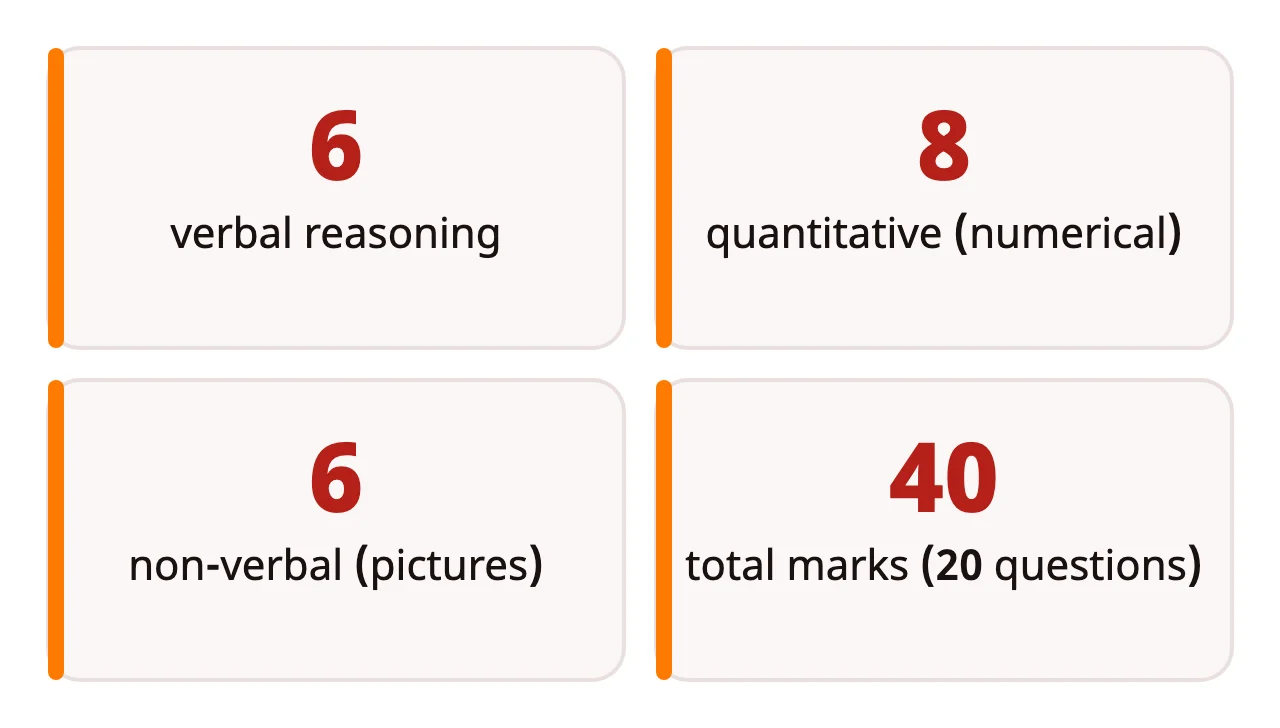
The Nayab Subba Paper I syllabus from the PSC: general knowledge in 11 sub-units with a fixed number of questions each (30 questions, 60 marks) and the General Mental Ability test with verbal (6), quantitative (8) and non-verbal (6) reasoning (20 questions, 40 marks); 45 minutes, pass mark 45.
The Nayab Subba (Nasu, नायब सुब्बा) first paper is "General Knowledge and General Mental Ability Test": 50 multiple-choice questions, 2 marks each, 45 minutes, pass mark 45. Unlike Kharidar, the Nasu first paper syllabus fixes how many questions come from each general knowledge sub-unit. Source: the PSC's official PDF.
Nasu first paper syllabus: general knowledge (30 questions, 60 marks)
| Sub-unit | Topic | Questions |
|---|---|---|
| 1.1 | The universe: the solar system (sun, planets, satellites, asteroids, meteors, comets), the origin and motion of the Earth | 1 |
| 1.2 | World geography: continents, oceans, poles, latitude and longitude, the international date line, mountains, deserts, earthquakes, volcanoes, rivers, glacial lakes, climate, trade winds and the monsoon | 2 |
| 1.3 | Nepal's geography: landforms, natural resources, geographical diversity and ways of life, climate and livelihoods | 4 |
| 1.4 | World history: the Magna Carta, the Industrial Revolution, the French Revolution, the American War of Independence, the Russian Revolution, the two World Wars and the Indian independence movement | 1 |
| 1.5 | History of Nepal: the Kirat, Lichchhavi and medieval periods; political events of modern history, their causes and results | 2 |
| 1.6 | Social and cultural conditions: customs, traditions, religion, castes and ethnic groups, languages, art, literature, music and cultural heritage | 4 |
| 1.7 | Economic conditions: agriculture, industry, trade, tourism, transport, communication, education, health, electricity and development plans | 3 |
| 1.8 | Science, technology and health: biotechnology, information technology, alternative energy, evolution and heredity, disease, vaccines and nutrition; things in daily use | 3 |
| 1.9 | Ecosystems and the environment: biodiversity, sustainable development, global warming, climate change, the ozone layer, pollution, population and migration | 3 |
| 1.10 | International relations: relations with neighbours and other countries, the United Nations (organs and specialised agencies), SAARC, BIMSTEC, ASEAN and the European Union | 2 |
| 1.11 | National and international current events: politics, society, the economy, science, culture, sports, books, awards, personalities and thinkers | 5 |
Level I and Level II questions
The general knowledge part mixes simple four-option questions (Level I) with Level II questions such as true or false, matching, filling in blanks, cause and effect, or the odd one out. Of the 30 GK questions, about 18 are simple and 12 are Level II. Level II questions take longer to read and are easier to get half right, so practise them on purpose.
The General Mental Ability test (20 questions, 40 marks)
Verbal reasoning (6 questions)
Comprehension, vocabulary, series, analogy, classification, coding-decoding, missing letters, direction and distance, logical analysis, ranking, statement and reason, induction, deduction, and sequences of actions or situations.
Quantitative (numerical) reasoning (8 questions)
Series, analogy, classification, coding, missing numbers, common properties, matrices, data interpretation and verification, arithmetic operations, percentages, fractions, decimals, ratios, averages, profit and loss, dates and calendars, and time and work.
Non-verbal reasoning (6 questions)
Series, analogy, classification, logical picture analysis, Venn diagrams, picture matrices, counting squares and triangles, building and analysing figures, dot positions, water and mirror images, embedded figures and the movement of figures.
How to study this paper
Divide your time by question weight: sub-units 1.3, 1.6 and 1.11 alone take 13 questions. In the GMAT, the quantitative part has the most questions (8); practise the formulas for percentages, ratios, averages and time and work every day. Every reasoning type is explained with examples in our Lok Sewa IQ questions guide, and you can practise with the IQ sample questions and Nasu GK sample questions (in Nepali).
The whole syllabus is on the Nayab Subba syllabus page, the marking and time on the Nayab Subba exam pattern page, and the courses for this paper, Nasu GK and Nasu IQ / GMAT, are listed below.
Frequently asked questions
Which GK sub-unit gives the most questions in the Nasu first paper?
Current events (sub-unit 1.11) gives 5 questions; Nepal's geography (1.3) and social and cultural conditions (1.6) give 4 each.
How many questions come from each part of the GMAT?
6 from verbal reasoning, 8 from quantitative (numerical) reasoning and 6 from non-verbal reasoning, 20 in total.
What are Level II questions?
Multiple-choice questions that could have more than four answers but show four options: true or false, matching, fill in the blanks, cause and effect, odd one out and similar.
Sources
- Nayab Subba or equivalent syllabus: Stage I (PDF, Nepali), Public Service Commission (2024-07-25)
Courses for this topic
Nayab Subba General Knowledge (GK): Paper I
The 60-mark GK part of the Nasu first paper, with video, notes and MCQ practice.
Nayab Subba IQ / GMAT (General Mental Ability): Paper I
The 40-mark Nasu IQ test: verbal, quantitative and non-verbal reasoning with tricks and drills.
Nayab Subba First Paper Pack: GK + IQ + Mock Tests
GK, IQ (GMAT), mock tests and weekly current affairs for the Nasu screening, all in one place.

Study in the Dipa App
Buy courses, join Live Classes and practise every day in the app. Payment works inside the app with eSewa.

Author
Dipa Academy editorial team
Dipa Academy's editorial team writes Lok Sewa guides from the Public Service Commission's official syllabus, notices and results, and cites every source.
Read next
Nasu Third Paper: a Different Paper per Service Group
21 November 2026 (मंसिर ५, २०८३)Nasu Second Paper: Contemporary Studies and Public Service
21 November 2026 (मंसिर ५, २०८३)Kharidar Third Paper: the Acts, Accounts and Law to Study
21 November 2026 (मंसिर ५, २०८३)